 University of Cambridge
I am a Postdoctoral Research Associate at the University of Cambridge, working with Prof. Robert Mullins and Prof. Timothy M. Jones on AIxSIM, an ARIA-funded cross-stack simulation effort for novel AI hardware. I received my Ph.D. in Computer Science from the University of Hong Kong (HKU), where I was affiliated with mmlab@HKU and advised by Prof. Ping Luo. During my Ph.D., I was also a visiting collaborator at the UTDA Lab, The University of Texas at Austin, hosted by Prof. David Z. Pan (IEEE/ACM Fellow). I received my M.Eng. from the Software School, Tsinghua University, advised by Prof. Xiaojun Ye, and my B.Eng. from the Department of Microelectronics, Fudan University, advised by Prof. Xuan Zeng and Prof. Minge Jing. My research interests lie at the intersection of AI and Electronic Design Automation (AI4EDA).

Chip Town
Action required
Problem: The current root path of this site is "baseurl ("_config.yml.
Solution: Please set the
baseurl in _config.yml to "Education
-
 The University of Hong KongPh.D. in Computer ScienceSep. 2021 - Nov. 2025
 -
 Tsinghua UniversityM.Eng. in Software EngineeringSep. 2017 - Jul. 2020
 -
 Fudan UniversityB.Eng. in Microelectronics EngineeringSep. 2013 - Jul. 2017
Experience
-
University of CambridgePostdoctoral Research AssociateDec. 2025 - Present
-
 The University of Texas at AustinVisiting PhD StudentFeb. 2024 - Jul. 2024
 -
 ByteDanceAlgorithm EngineerJul. 2020 - Jul. 2021
Honors & Awards
-
Electronics Best PhD Thesis2026
-
NeurIPS Scholar Award2024
-
Hong Kong PhD Fellowship2021
-
HKU Presidential PhD Scholar2021
-
Outstanding Graduate of Software School, Tsinghua University2020
-
Outstanding Bachelor Thesis Award, Fudan University2017
-
Outstanding Graduate of Shanghai, China2017
-
National Scholarship, China2015
Service
- Council Member, UK Tsinghua Association (UKTA)
Selected Publications (view all )
 ICML
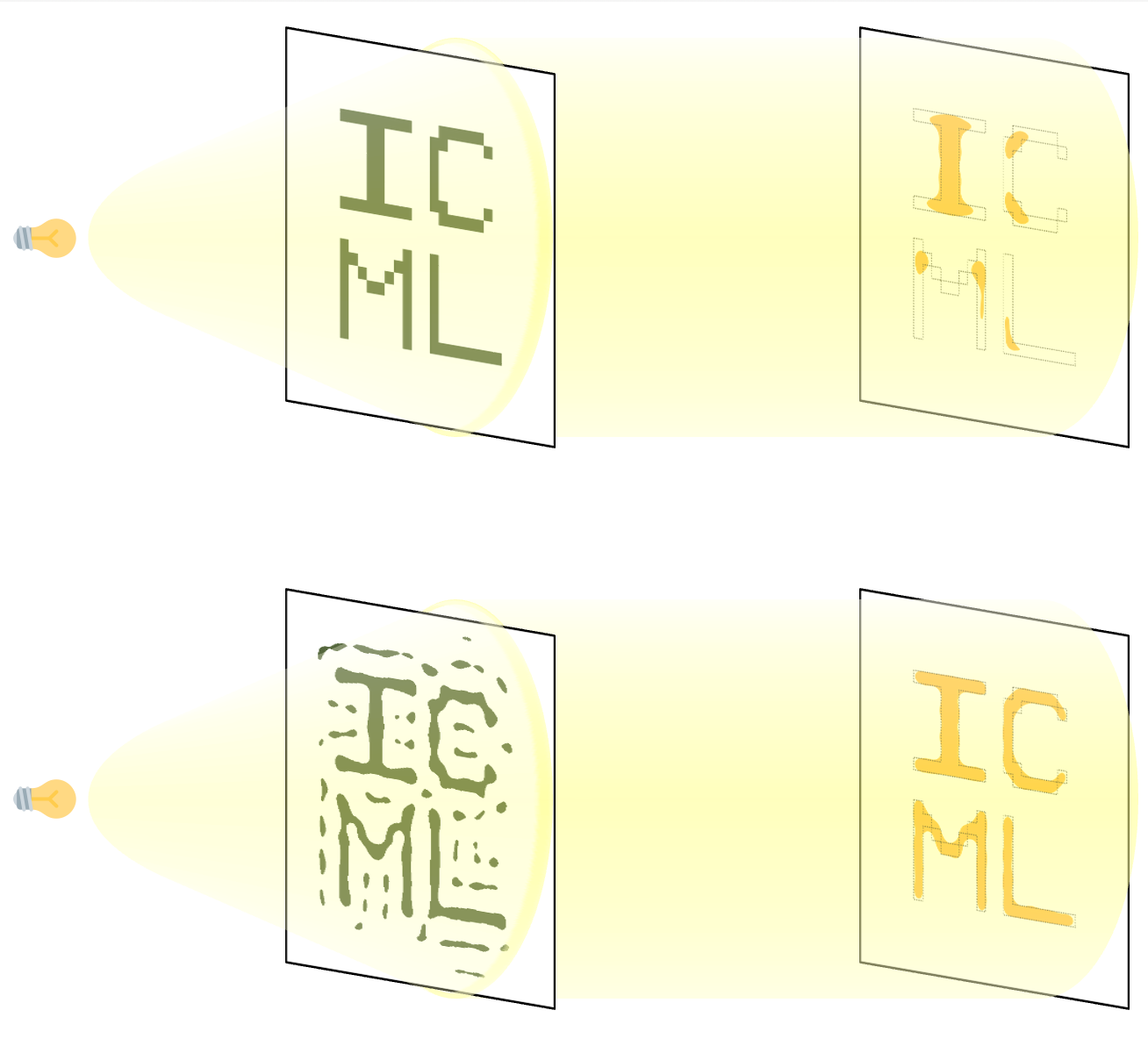
ICMLLithoGRPO: Fast Inverse Lithography via GRPO Reinforced Flow Matching
Yao Lai, Xuyuan Xiong, Zeyue Xue, Guojin Chen, Jing Wang, Xihui Liu, Rui Zhang, Robert Mullins, Bei Yu, Ping Luo
International Conference on Machine Learning (ICML) 2026
LithoGRPO is an inverse lithography framework that unifies flow matching with GRPO-based reinforcement learning to optimize masks under physics-based rewards, using a fast shot-counting algorithm (over 130x speedup) to reach state-of-the-art performance.
ICML
 TCAD
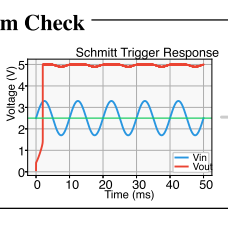
TCADAnalogCoder-Pro: Unifying Analog Circuit Generation and Optimization via Multi-modal LLMs
Yao Lai, Sungyoung Lee, Guojin Chen, Souradip Poddar, Mengkang Hu, Bei Yu, Ping Luo, David Z. Pan
IEEE Transactions on Computer-Aided Design of Integrated Circuits and Systems 2026
AnalogCoder-Pro is a multimodal LLM framework that automates analog circuit design by unifying topology generation and device sizing through a diagnosis-and-repair feedback loop, reusable circuit library, and Bayesian optimization, outperforming existing methods on a 13-circuit-type benchmark.
TCAD
 NeurIPS
FUDOKI: Discrete Flow-based Unified Understanding and Generation via Kinetic-Optimal Velocities
Jin Wang*, Yao Lai*, Aoxue Li, Shifeng Zhang, Jiacheng Sun, Chengyue Wu, Zhenguo Li, Ping Luo (* equal contribution)
Conference on Neural Information Processing Systems (NeurIPS) 2025 Spotlight
FUDOKI is a novel unified multimodal model that replaces traditional autoregressive architectures with discrete flow matching, enabling more flexible and effective visual understanding and image generation with performance comparable to state-of-the-art models.
NeurIPS
 AAAI
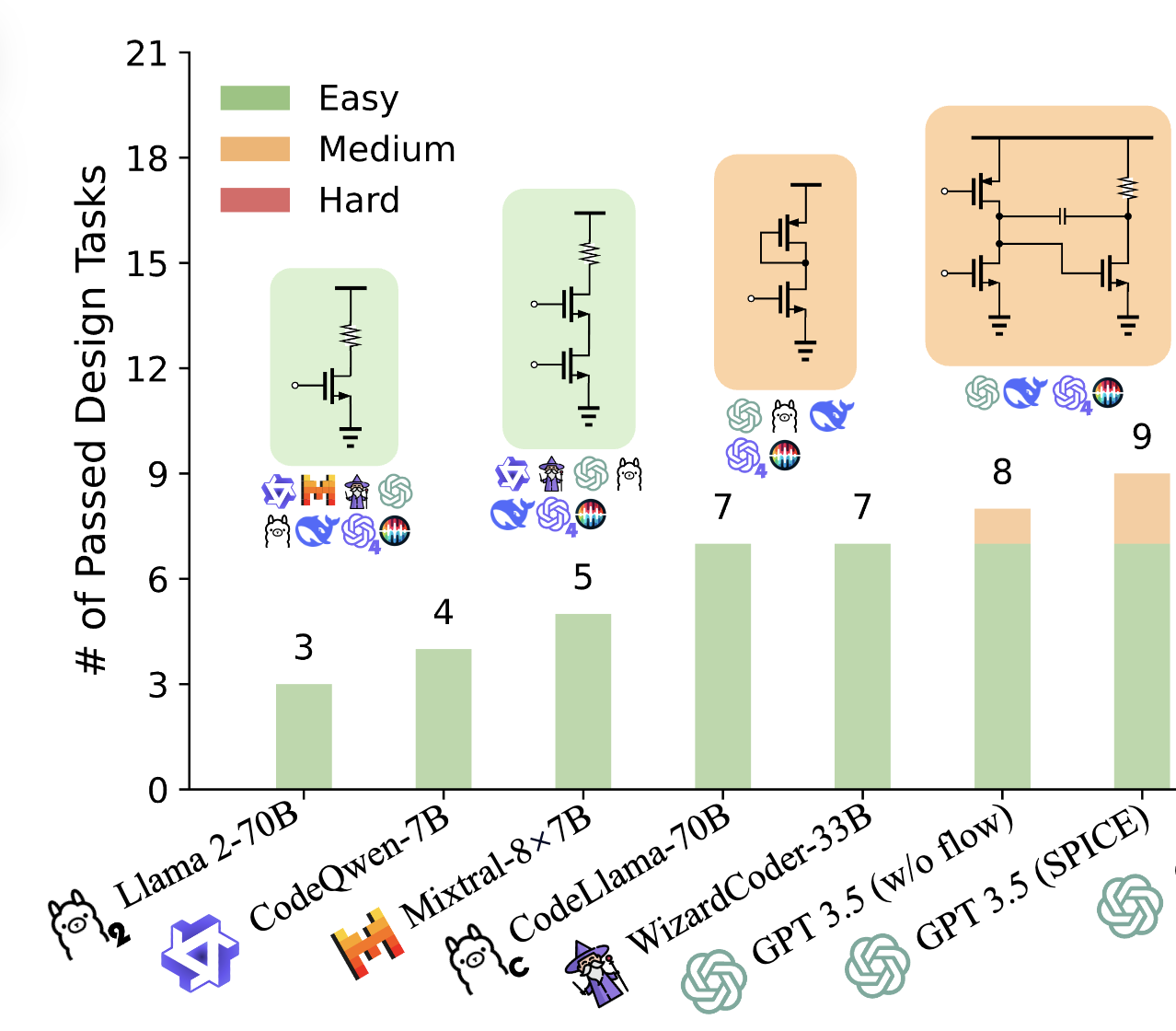
AAAIAnalogCoder: Analog Circuit Design via Training-Free Code Generation
Yao Lai, Sungyoung Lee, Guojin Chen, Souradip Poddar, Mengkang Hu, David Z. Pan, Ping Luo
AAAI Conference on Artificial Intelligence (AAAI) 2025 OralAAAI 2025 Top-15 Influential Papers (Rank 11)
AnalogCoder is a training-free LLM agent for analog circuit design, using feedback-driven prompts and a circuit library to achieve high success rates, outperforming GPT-4o by designing various circuits.
AAAI
 NeurIPS
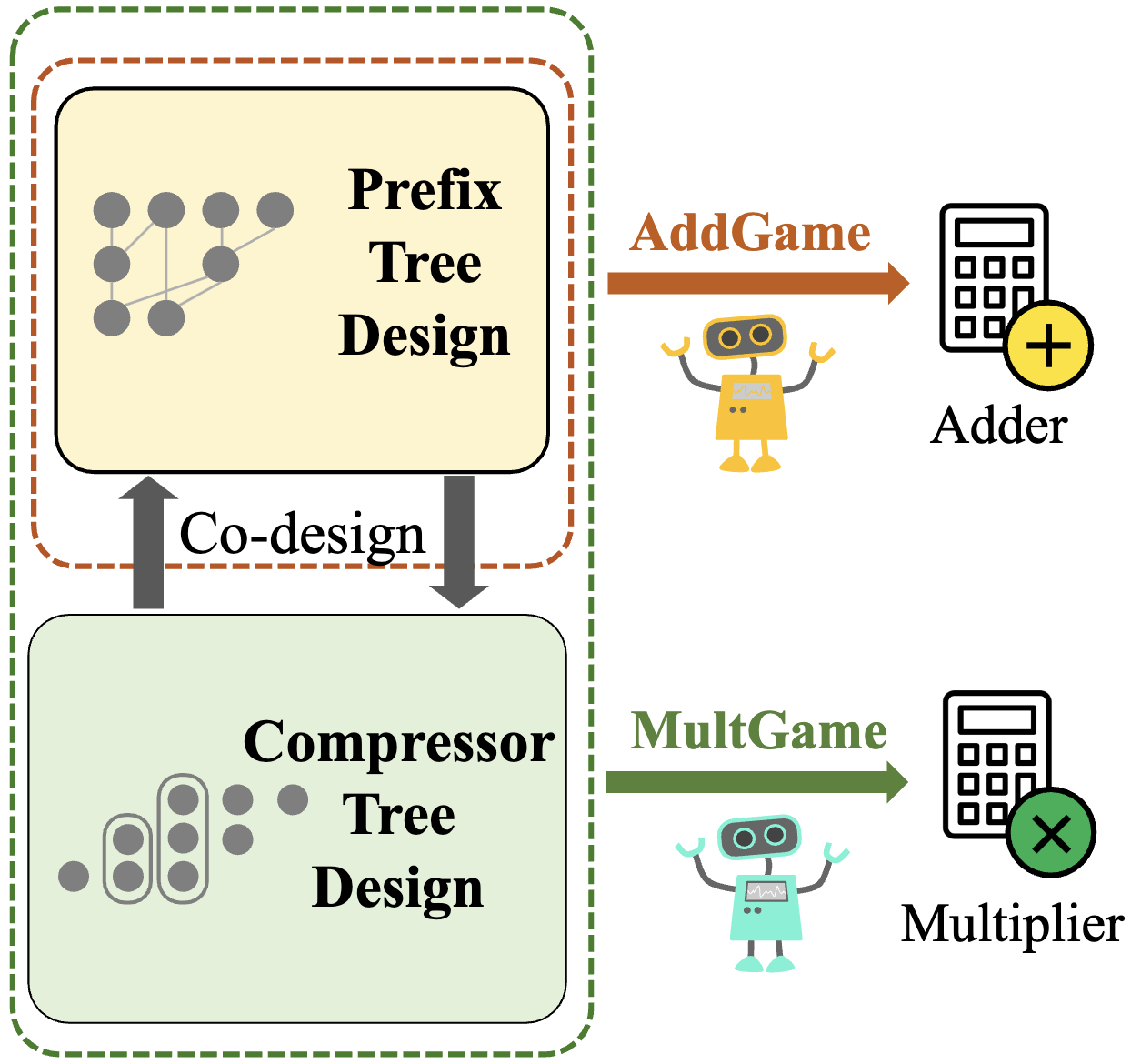
Scalable and Effective Arithmetic Tree Generation for Adder and Multiplier Designs
Yao Lai, Jinxin Liu, David Z. Pan, Ping Luo
Conference on Neural Information Processing Systems (NeurIPS) 2024 Spotlight
This work uses reinforcement learning to optimize adder and multiplier designs as tree generation tasks, achieving up to 49% faster speed and 45% smaller size, with scalability to 7nm technology.
NeurIPS
 ICML
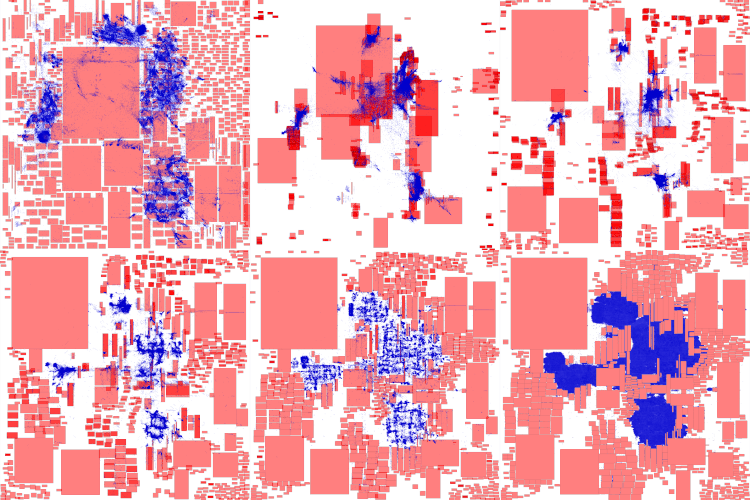
ICMLChiPFormer: Transferable Chip Placement via Offline Decision Transformer
Yao Lai, Jinxin Liu, Zhentao Tang, Bin Wang, Jianye Hao, Ping Luo
International Conference on Machine Learning (ICML) 2023
ChiPFormer is an offline RL-based method that achieves 10x faster chip placement with superior quality and transferability to unseen circuits.
ICML
 NeurIPS
MaskPlace: Fast Chip Placement via Reinforced Visual Representation Learning
Yao Lai, Yao Mu, Ping Luo
Conference on Neural Information Processing Systems (NeurIPS) 2022 Spotlight
MaskPlace is a method that leverages pixel-level visual representation for chip placement, achieving superior performance with simpler rewards, 60%-90% wirelength reduction, and zero overlaps.
NeurIPS
 ECAI
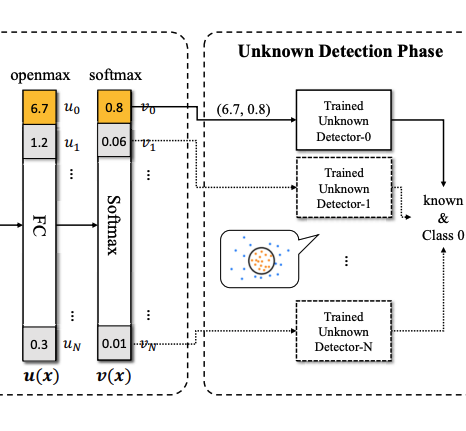
ECAIOpenSMax: Unknown Domain Generation Algorithm Detection
Yao Lai, Guolou Ping, Yuexin Wu, Chenhui Lu, Xiaojun Ye
European Conference on Artificial Intelligence (ECAI) 2020
We propose OpenSMax, a LSTM-based model that learns patterns from domain names to detect botnet-generated domains and flag previously unseen DGA families as “unknown,” improving accuracy over prior methods while keeping false alarms under control.
ECAI